

#1 Graphic Design and Installation in Dallas-Fort Worth
#1 Graphic Design and Installation in Dallas-Fort Worth

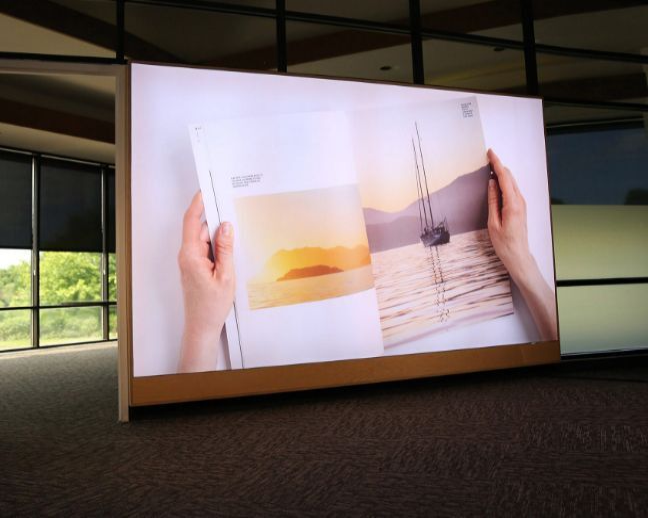
A slim aluminium extrusion with a narrow channel running around the inside edge. Your graphic is printed onto stretch fabric with a thin silicone strip sewn along its border. You push that strip into the channel, and the fabric pulls tight, flat, and edge-to-edge, with no visible hardware and no frame overlapping the image.
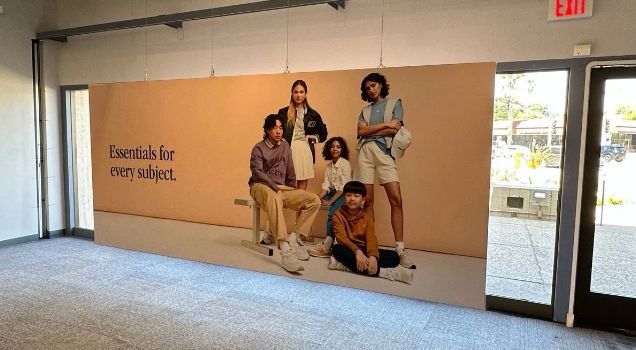
The result looks like a printed panel floating in an aluminium border, or in the frameless versions, like the graphic simply is the wall.
The reason people become loyal to the format: when the promotion changes, you order a new fabric print, and it arrives in an envelope. The frame stays on the wall for years. Part of the iCandy Grafix display range.
Fixed flush to the wall, depth typically 20 to 40mm. Cleanest look and the most common commercial installation.
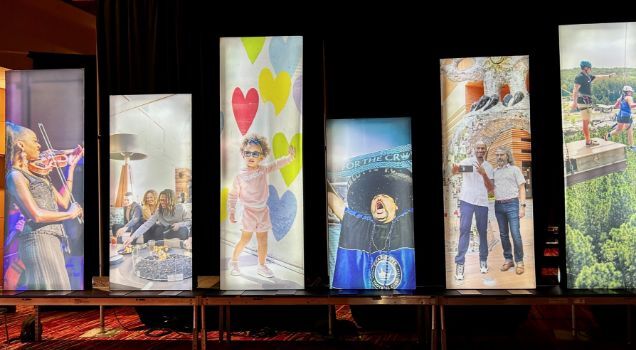
With feet or a weighted base, single- or double-sided. For trade shows, showrooms, and anywhere it needs to move.
Edge-lit LEDs behind translucent stretch fabric. Expensive up front and genuinely unbeatable in a dim lobby, a restaurant at night, or a retail interior with weak natural light. If you want illumination without the fabric system, see backlit film.
Retail walls that change seasonally. This is the primary use case. A retailer changing graphics four times a year pays for the frame once and then pays fabric prices three times a year afterwards.
Corporate lobby and reception feature walls. See also interior graphics.
Restaurant menu boards and feature panels, particularly where the menu changes with the season.
Trade show back walls, in freestanding lightweight versions with feet.
Backlit light boxes, with LEDs behind translucent fabric, are where the format is at its most impressive.
Estate agent and property display windows.
A replacement fabric graphic typically costs 15 to 30 percent of the original frame-plus-graphic price.
That single number is the whole case for the format. A business changing its wall message quarterly on rigid printed panels is buying a completely new sign four times a year. The same business on SEG frames buys the hardware once and then buys fabric, which ships flat in an envelope and installs in five minutes without a contractor.
If your graphics never change, SEG is not worth the premium, and a printed rigid panel is cheaper. If they change even twice a year, the frame pays for itself quickly.
Start at one corner and pull the silicone strip out of the channel, working around the frame. Remove the old fabric. Position the new fabric, press one corner strip into the channel, then work around the perimeter, pressing the strip in with your fingers or the plastic tool supplied.
One person, about five minutes on a standard 4ft panel, no tools required. Any staff member can do it.
Most SEG fabrics can be gently machine-washed cold and air-dried, then re-stretched into the frame. The stretching pulls out any remaining creases. Do not tumble dry on high heat, which can shrink the fabric enough that it will no longer stretch into the channel correctly.
An SEG, or silicone edge graphic, frame is an aluminium frame that holds a fabric print using a silicone strip sewn to the fabric edge. The result is a flat, seamless-looking graphic with no visible hardware, and the fabric can be swapped without replacing the frame.
Pull the silicone strip out of the frame channel starting at one corner, remove the old fabric, then press the new strip into the channel working around the perimeter. It takes one person about five minutes on a standard 4ft panel and requires no tools.
If your graphics change at least twice a year, yes. Replacement fabric costs 15 to 30 percent of the original frame and graphic price, so the hardware pays for itself quickly. If the graphic will never change, a printed rigid panel is more economical and iCandy Grafix will tell you so.
Yes. Most SEG fabrics can be gently machine washed cold and air dried, then re-stretched into the frame, which pulls out remaining creases. Do not tumble dry on heat, since shrinkage can prevent the fabric stretching back into the channel.
Effectively any size, from small A-series panels up to full wall installations built from linked sections. Larger installations are produced as multiple frames with the joins planned to fall on natural breaks in the artwork, which iCandy Grafix plans at design stage.
Copyright © 2026 iCandy Grafix. All rights reserved. Powered by Fast Hippo Media

