

#1 Graphic Design and Installation in Dallas-Fort Worth
#1 Graphic Design and Installation in Dallas-Fort Worth

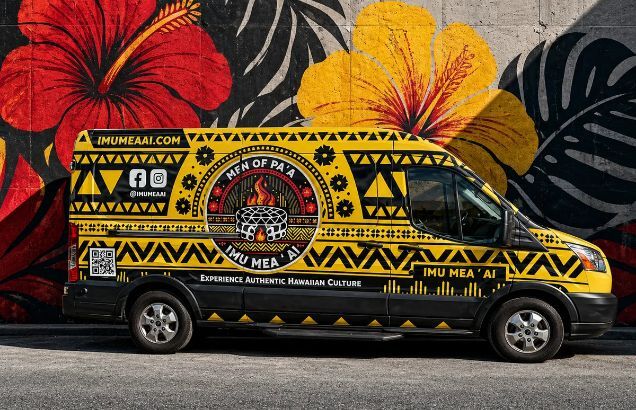
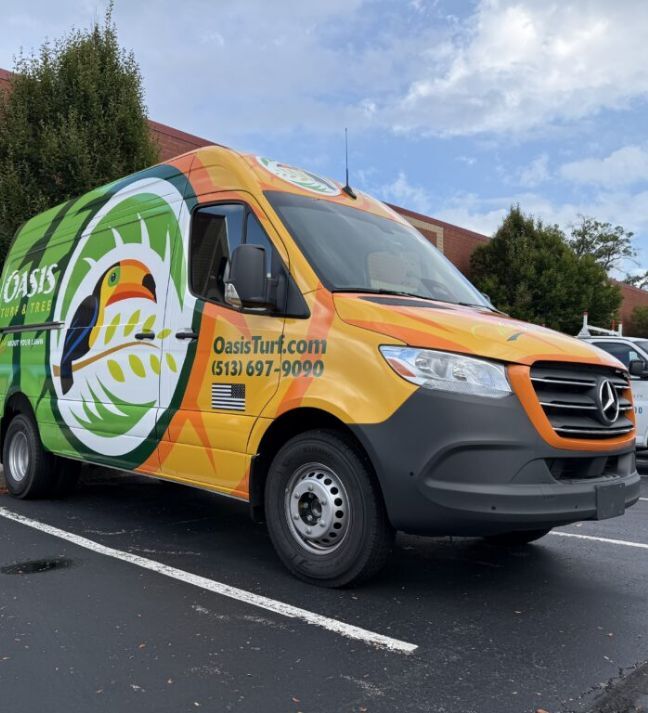
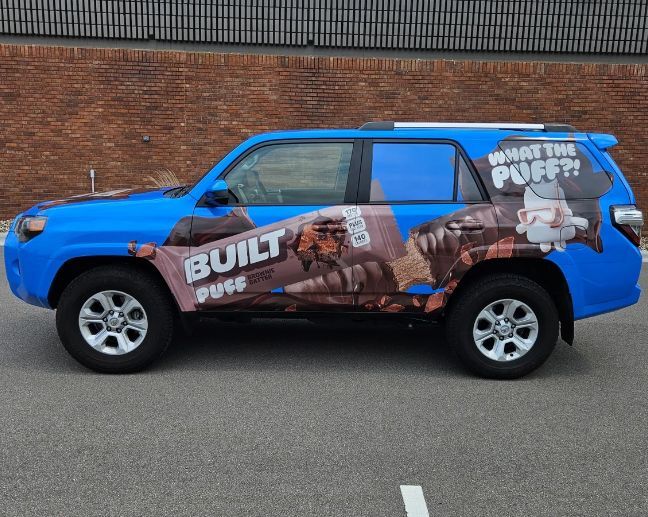
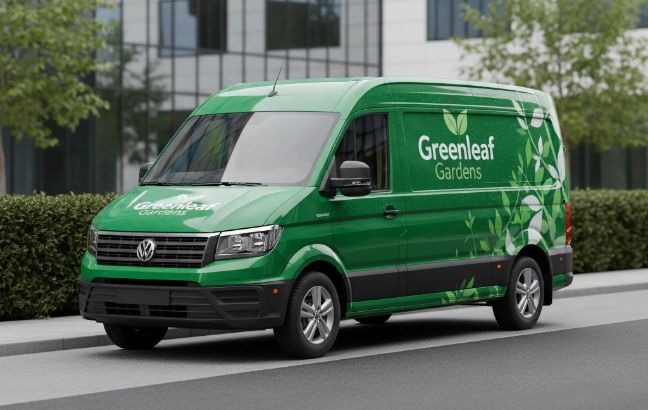
A full wrap covers every painted surface on the vehicle. Roof included on request. Chrome bumpers, grilles, plastic trim, and glass are generally left alone, though glass can take perforated film where regulations allow.
Done properly, the film tucks into door jambs, wraps around handles and mirrors, and follows the body creases so closely that people assume the vehicle is painted. Done badly, it lifts at the edges within a year, and everybody can tell. The difference is almost entirely in the preparation and the finishing, neither of which shows up in a photo of a freshly wrapped truck.
Our flagship fleet graphics service.
The vehicle is the storefront. There is no argument here; wrap it.
Roofing, HVAC, pest control, landscaping, pool service. In neighbourhoods like Prosper, Celina, and West McKinney, where houses are similar and neighbours talk, a vehicle parked in a driveway for six hours generates work. We have clients who track it.
Where the vehicle is in constant motion in dense traffic.
An enclosed trailer is a flat 16- or 20-foot billboard with no compound curves, which makes it the cheapest square footage of high-impact advertising available anywhere. If you tow one, wrap it before you wrap the truck.
Where you want a vehicle in a colour it does not come in, without the permanence or cost of paint.
Generally no. A full wrap uses opaque film across all painted surfaces, so the underlying colour is covered.
There is one caveat worth knowing before you choose. Where there is strong contrast between the vehicle colour and the wrap colour, faint edges can remain visible at door hinges, deep recesses and panel gaps, since film cannot always be wrapped fully into those areas. A white van under a black wrap will show slightly more of this than a white van under a light grey wrap. It is minor, most owners never notice, and you should still know about it before you sign off.
Window coverage on vehicles is regulated by state and local law and it varies by which window. Rear and rear-side windows are normally permitted in perforated one-way vision film, provided the vehicle has both side mirrors. Windscreens and front side windows generally cannot be covered.
Rules change, so verify the current Texas position before finalising a design that relies on window coverage. We will produce to whatever is permitted and we will flag it during design if a layout depends on glass we think may be restricted.
The vehicle arrives clean and free of wax. We do a full solvent wipe of every panel including the jambs, because any residue left behind becomes a failure point.
Film is laid, positioned, squeegeed with air-release channels worked out, then trimmed. Edges are tucked into jambs and around returns rather than cut flush at the panel edge, because a flush-cut edge is the first thing to lift.
Then the vehicle is post-heated. Every recess, seam, curve and tucked edge is brought to a specific temperature which resets the film’s memory so it stops trying to return to flat. This adds hours to the job. It is the step that gets skipped on cheap wraps and it is the reason those wraps start curling at the corners in year two. We do not skip it.
Full wraps take 2 to 3 days. We ask you to leave washing for 24 hours and automatic washes for a week.
Roof inclusion, ladder racks, external hardware, heavy rivets, and removal of existing graphics all move these numbers.
Hand wash with mild automotive soap. Touchless automatic washes are fine; brush washes are not. Keep pressure washers a foot back, under 2,000 psi, with a wide fan tip, and never aimed into a seam. Remove fuel, bird droppings, and insect residue promptly. No wax, no polish, no solvent cleaners. Park under cover where you can.
Expect 5 to 7 years, with 5 being realistic for a vehicle that lives outside in this climate.
A full wrap typically costs $2,500 to $4,500 for a standard cargo van, $3,000 to $5,000 for a box truck, and $2,000 to $3,500 for a car or SUV. iCandy Grafix quotes by vehicle size, surface complexity, whether the roof is included, and whether existing graphics need removing first.
No. A full wrap uses opaque film across all painted surfaces, so the original colour does not matter. The only note is that a strong contrast between the vehicle colour and the wrap colour can leave faint edges visible at hinges and deep recesses where film cannot fully wrap around.
A full vehicle wrap takes 2 to 3 days at iCandy Grafix. We install indoors and post-heat every seam and recess before the vehicle leaves, which is what prevents lifting later. The vehicle should arrive clean and free of wax.
Yes, on request. Roof coverage adds cost and is usually only worth it on vehicles regularly seen from above, such as those parked in multi-storey car parks or filmed from drones. Most work vehicles skip it.
Individual panels can be reprinted and replaced. We keep your artwork on file so a replacement panel matches the original design exactly, though a new print will be slightly brighter than film that has been weathering for a few years.
Copyright © 2026 iCandy Grafix. All rights reserved. Powered by Fast Hippo Media

