

#1 Graphic Design and Installation in Dallas-Fort Worth
#1 Graphic Design and Installation in Dallas-Fort Worth

This is the part most print shops get wrong, and it is the reason a lot of expensive light boxes look grey.
Artwork designed to reflect light behaves completely differently when light is pushed through it from behind. A normal print viewed inside a light box looks washed out, pale and lifeless, because the ink density that reads as rich under reflected light is far too thin once illuminated from the rear.
Backlit film is a translucent polyester substrate, and printing it correctly requires a heavier ink lay and a colour profile built specifically for transmitted light. Get it right and the colours look richer lit than they do unlit. Get it wrong and your $4,000 illuminated cabinet looks like a dull grey box, and no amount of adjusting the LEDs will fix it, because the problem is the print.
Part of our digital printing capability.
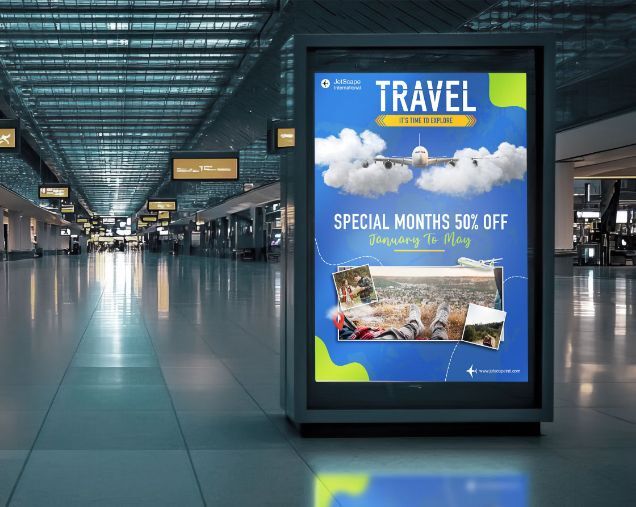
Restaurant and drive-through menu boards, which is the highest-volume application.
Retail light boxes and shopping centre directories.
Airport, hospital and transit wayfinding.
Illuminated storefront cabinet signs, replacing faded or cracked existing faces.
Cinema, theatre and venue poster cases.
Trade show backlit walls, usually in SEG frames.
Pharmacy, clinic and reception feature panels.
If you can see the individual LEDs through your current graphic, that is a media problem and it is fixable.
Two approaches. A heavier or more diffusive film, which spreads the light before it reaches the image. Or a second diffusion layer behind the printed film. Which one is right depends on the depth of the cabinet and the LED spacing, so send a photograph of the lit box and we will tell you.
Shallow cabinets with widely spaced LEDs are the worst case and the most common in older signage. Deeper boxes give light room to spread and rarely hotspot at all.
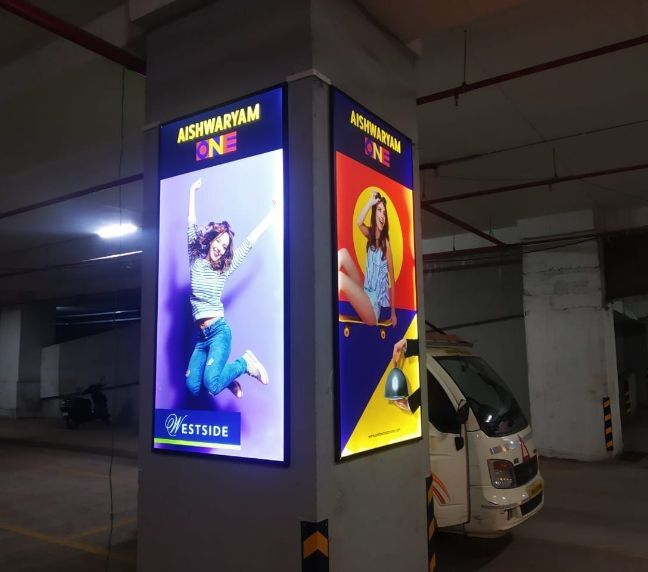
Backlit stretch fabric has largely taken over for light boxes above about four feet.
It diffuses light beautifully, it arrives folded in an envelope rather than rolled in a tube, and it swaps into an SEG frame in about five minutes with no tools. For a restaurant that changes its menu quarterly, this is almost always the better long-term choice than rigid film panels, because each change costs a fraction of a new panel and any staff member can fit it.
Rigid backlit film still wins on static installations that never change, and on smaller cabinets where a fabric system is disproportionate.
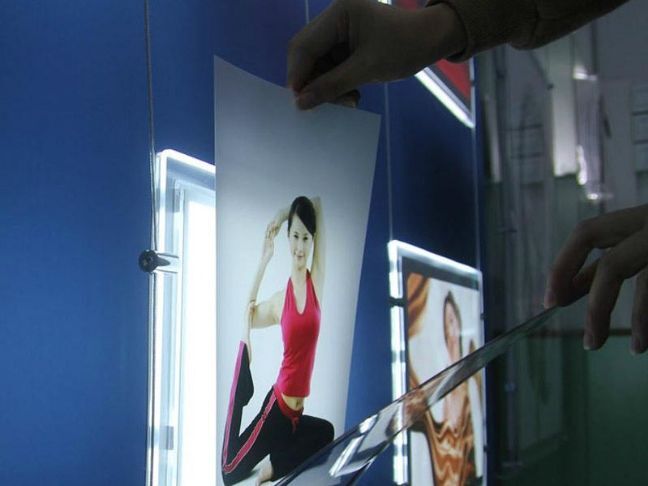
We do a steady amount of this: a cabinet that still works fine with a face that has gone yellow, cracked or out of date.
Send photographs of the cabinet including the retaining channels, plus the measurement of the visible opening rather than the outside of the frame. Getting that measurement wrong is the most common reason a replacement face does not fit, because the frame overlaps the panel by an inch or more on each side.
Backlit film is a translucent print media designed for light boxes and illuminated signs, where light passes through the graphic rather than reflecting off it. iCandy Grafix prints backlit film with heavier ink density and a transmitted-light colour profile so colours stay rich when the sign is illuminated.
Standard opaque vinyl blocks most of the light and looks dark and muddy when illuminated. Backlit film or backlit fabric is required for anything lit from behind. iCandy Grafix can advise on the correct media for your existing cabinet.
For menus that change regularly, backlit stretch fabric in an SEG frame is the best option, since replacement graphics ship folded and swap out in about five minutes without tools. For static menus that rarely change, printed backlit film panels are more economical.
That is a media problem rather than a lighting problem. A heavier or more diffusive film, or an additional diffusion layer behind the print, will spread the light evenly. Shallow cabinets with widely spaced LEDs hotspot most, and iCandy Grafix can assess it from a photograph of the lit box.
Yes. Send photographs of the cabinet including the retaining channels, and measure the visible opening rather than the outside of the frame, since the frame typically overlaps the panel by an inch or more per side. Incorrect measurement is the usual reason a replacement face does not fit.
Copyright © 2026 iCandy Grafix. All rights reserved. Powered by Fast Hippo Media

