

#1 Graphic Design and Installation in Dallas-Fort Worth
#1 Graphic Design and Installation in Dallas-Fort Worth

Expanded foam PVC, sold as Sintra, Komatex and similar names, and styrene are the budget rigid substrates.
They cut and route cleanly into any shape. They are light enough to hang with tape or two screws. They cost a fraction of aluminium composite. Indoors, they last indefinitely.
Outdoors in Texas, they warp. Foam PVC expands and contracts with temperature more than most substrates, and after two summers on a south-facing wall it bows visibly. We will supply PVC for an exterior sign if you want one, and we will tell you that timeline first rather than after. For permanent exterior work, use ACM.
Part of our signs, letters and graphics range.
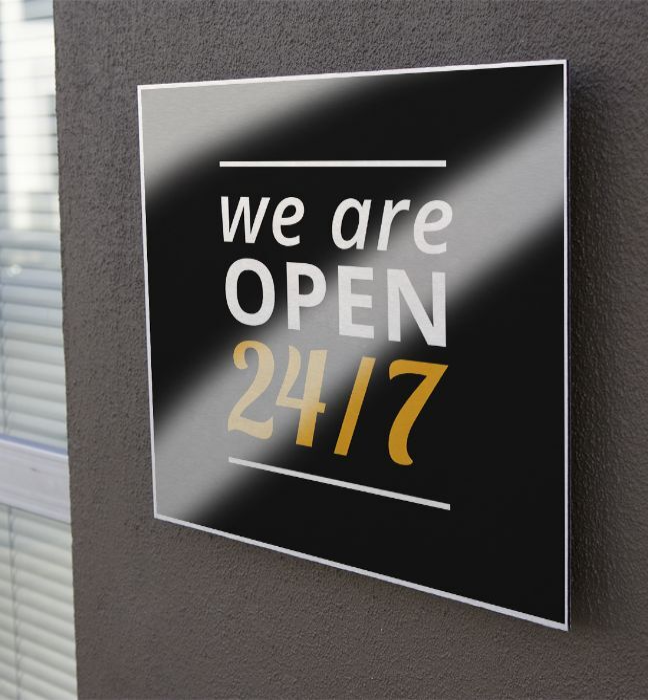
Interior office and departmental signage. Room names, department identification, wayfinding.
Retail POS and display panels. See POS signs.
Menu boards and price panels in interior positions.
Cut-to-shape display pieces, props and photo props. Routing is where PVC really earns its place, because it cuts into complex shapes far more economically than metal.
Backer panels behind dimensional letters.
Short-term exterior signage, six to twelve months. Site notices, event directionals, temporary tenant boards.
Trade show and event panels, where weight matters because you are paying event freight rates. See Displays.
Dimensional letters themselves, in thicker gauges. Painted 19mm PVC letters read as metal from ten feet at a fraction of the cost.
3mm for wall-mounted interior panels.
6mm for freestanding pieces and anything routed into a shape with thin sections that need rigidity.
10mm and above for chunky dimensional letters, structural display work and anything freestanding.
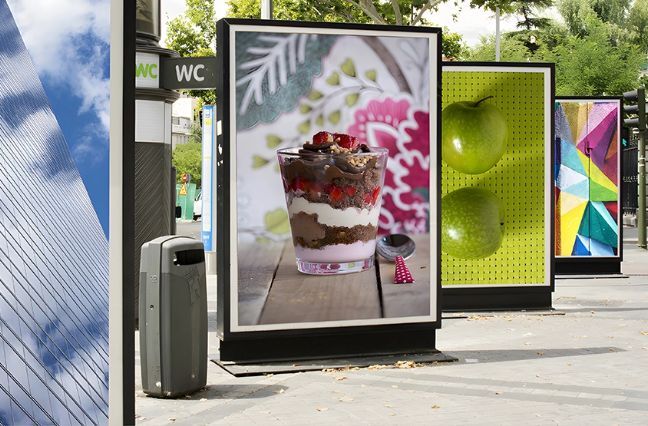
Foam PVC is thicker, more rigid, routs cleanly and holds an edge. Better for anything structural, shaped or freestanding.
Styrene is thinner, lighter, cheaper and more flexible. Better for flat printed panels and point of sale where it will be wall-mounted or slotted into a holder.
For most sign applications, foam PVC is the better specification and the small extra cost is worth it.
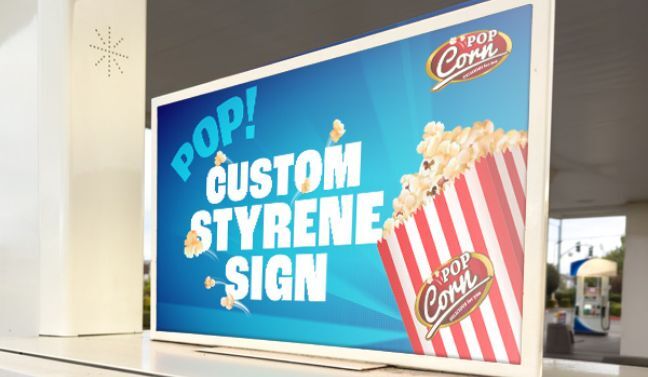
Foam PVC is the most economical substrate to cut into complex shapes, which is why it dominates display and prop work.
Logos, arrows, silhouettes, mascots, letters, floor plan cutouts, anything with a defined outline. The cut edge on foam PVC is clean and can be painted, so a routed shape does not need edge finishing the way an acrylic cut might.
For short-term exterior use of six to twelve months, yes. For permanent outdoor signage, no. Expanded PVC expands and contracts with temperature and bows noticeably after a couple of Texas summers. iCandy Grafix recommends aluminium composite panel for anything permanent outdoors.
Foam PVC is thicker and more rigid, suiting cut-to-shape work, freestanding pieces and structural applications. Styrene is thinner, lighter and less expensive, suiting flat printed panels and point of sale signage. Foam PVC is the better choice for most sign applications.
Yes. Foam PVC routs cleanly, so it can be shaped into logos, arrows, silhouettes, letters and complex outlines. The cut edge is clean and can be painted, which is why PVC is the most economical substrate for shaped and display work.
Use 3mm for wall-mounted interior panels, 6mm for freestanding pieces and routed shapes with thin sections, and 10mm or thicker for dimensional letters and structural display work.
Yes, and it is a good option. Painted foam PVC letters in thicker gauges read as painted metal from normal viewing distance at a fraction of the cost of aluminium. iCandy Grafix recommends PVC letters for interior applications and protected exterior positions.
Copyright © 2026 iCandy Grafix. All rights reserved. Powered by Fast Hippo Media

