

#1 Graphic Design and Installation in Dallas-Fort Worth
#1 Graphic Design and Installation in Dallas-Fort Worth

Soft drape with slight stretch. The general-purpose choice and what we use unless there is a reason not to.
Crisper, holds its shape better, and the right pick where the banner needs to hang square from pole pockets rather than drape.
An opaque backing layer sandwiched between two printed faces, for true double-sided work.
For tension frame systems. See SEG frames, which is a better long-term solution than a hanging banner where the graphic changes regularly.
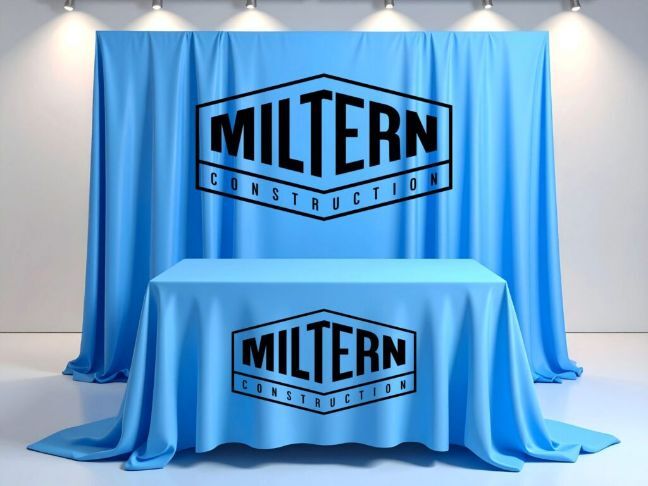
Photography. Fabric does not throw glare back at a camera flash or a stage light. If your banner will appear behind a speaker, a team, an award winner or a step-and-repeat line, fabric is the correct material and vinyl is not.
Travel. Fabric folds into a bag. Vinyl has to be rolled in a tube, and a tube is awkward to check as luggage and awkward to store. For anything that travels to multiple events, fabric wins on logistics alone.
Where it should read as decor rather than advertising. A matte fabric drape in a hotel ballroom or a church sanctuary reads as considered. A shiny vinyl sheet in the same room reads as temporary.
Part of the iCandy Grafix banners and flags range, printed by dye sublimation so the ink is bonded into the fibre rather than sitting on the surface.
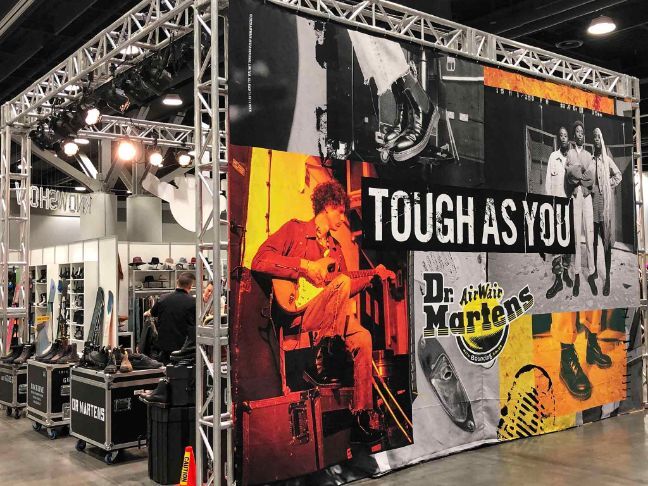
Sewn hem all round, double stitched. Then whichever of these suits the installation: pole pockets top and bottom, grommets, hook and loop strips, or a sewn-in weight bar along the bottom edge.
The weight bar is worth asking for on stage backdrops and anything hanging free. It pulls the banner straight, stops it moving in air conditioning, and it reduces creasing noticeably.
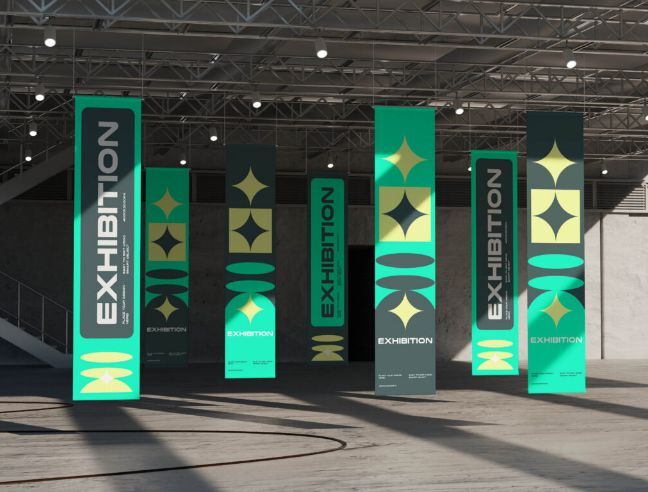
Fabric folds. That is the trade-off for the portability that makes it worth choosing in the first place, and anyone who tells you their fabric banner arrives crease-free out of a folded package is not being straight with you.
What actually happens: fold lines are visible when it comes out of the bag, and they relax on their own within a few hours of hanging. A handheld garment steamer clears them in about a minute. Do not iron the printed face directly, and do not use a high heat setting.
If the banner is going up an hour before an event, take a steamer. If it goes up the night before, you will not need one.
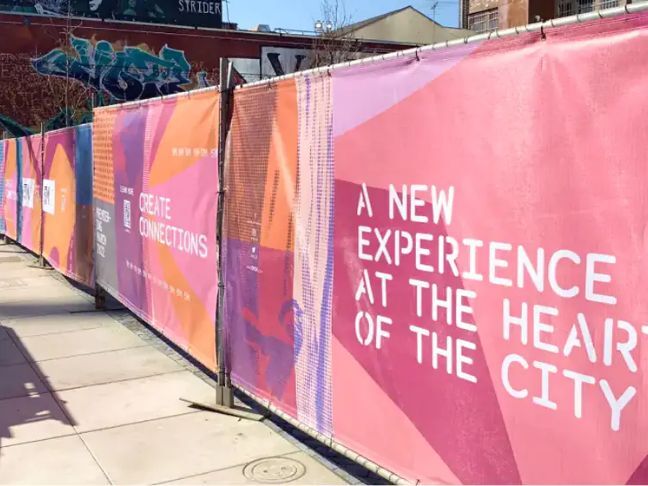
Dye sublimated fabric can be machine washed cold and hung to dry, without the print fading, cracking or peeling, because the ink is inside the fibre rather than on top of it. Do not bleach and do not tumble dry on heat.
This matters more than it sounds for anything used repeatedly at outdoor events, where fabric picks up dust and marks that vinyl would simply wipe off.
Fabric is better indoors, for anything photographed, and for anything that travels folded, because it has no glare and no permanent crease lines. Vinyl is better outdoors and anywhere the banner needs to shed water and resist tearing. iCandy Grafix recommends based on where the banner is going and how it will be transported.
Fabric banners develop fold lines in transit, which relax within a few hours of hanging. A handheld garment steamer removes them in about a minute. iCandy Grafix can add a sewn bottom weight bar, which keeps the banner pulled straight and reduces creasing noticeably.
Yes. Dye sublimated fabric banners can be machine washed cold and hung to dry without fading or cracking, since the ink is bonded into the polyester fibre rather than printed onto the surface. Do not bleach or tumble dry on heat.
Fabric banners take 5 to 7 business days after proof approval, slightly longer than vinyl because each piece is printed, cut and sewn to order.
Copyright © 2026 iCandy Grafix. All rights reserved. Powered by Fast Hippo Media

