

#1 Graphic Design and Installation in Dallas-Fort Worth
#1 Graphic Design and Installation in Dallas-Fort Worth

The traditional way to make a rigid sign involves three materials. Print onto adhesive vinyl, laminate the vinyl, then mount the whole thing to a board.
Three layers means three chances for a bubble, a piece of trapped dust or a misalignment. It also means an edge, and an edge is where a sign starts to fail. Given a few years, temperature cycling and a bit of handling, that vinyl edge lifts.
Direct to substrate means the flatbed printer lays UV-cured ink straight onto the panel itself. One material. No edge to peel, no laminate film sitting over the image softening the detail, and a noticeably sharper result. Part of the iCandy Grafix digital printing capability.
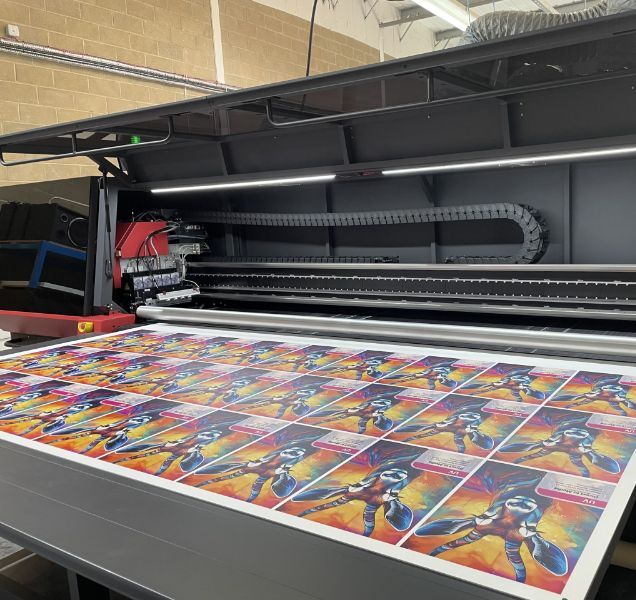
Acrylic signs and standoff-mounted lobby panels. On clear acrylic especially, a mounted vinyl layer is visible through the panel from the side and it undermines the whole point of using clear material.
ACM panel signs for exterior building and site signage, where an unlaminated printed surface with UV ink outlasts a vinyl-faced panel.
Point of sale and retail displays produced in volume, where removing two production steps per unit matters across a run of five hundred.
Directional and wayfinding signage.
Awards, plaques, gifts and recognition pieces.
Backer panels behind dimensional letters.
Photo tiles, coasters and promotional items.
Acrylic in clear, white and coloured. Aluminium composite (ACM and Dibond). Aluminium sheet. PVC and styrene. Coroplast. Wood and MDF. Foam board. Glass. Ceramic tile. Powder-coated and bare metal panels.
Unusual surfaces are worth asking about. Most non-porous materials will take UV ink with the right adhesion promoter, and we would rather test a sample than tell you no on a guess.
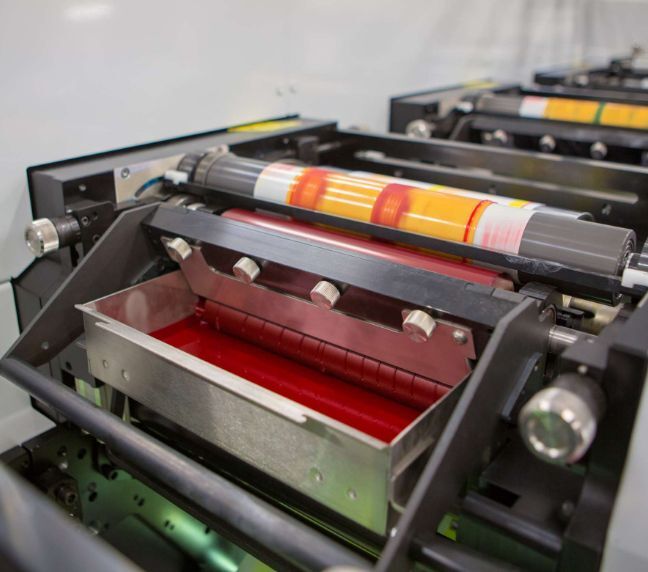
Standard printing has no white. It assumes a white substrate and uses the paper or vinyl itself as the lightest tone.
UV flatbed printing can lay white ink as an actual colour. That is what allows full colour printing onto clear, black, coloured and metallic substrates, because a white layer can be printed underneath the colour to give it something to sit on.
It also allows selective white, where some areas of a clear panel stay transparent and others are backed in white. That technique is behind a lot of the frosted-and-clear effects on modern office glazing and acrylic signage.
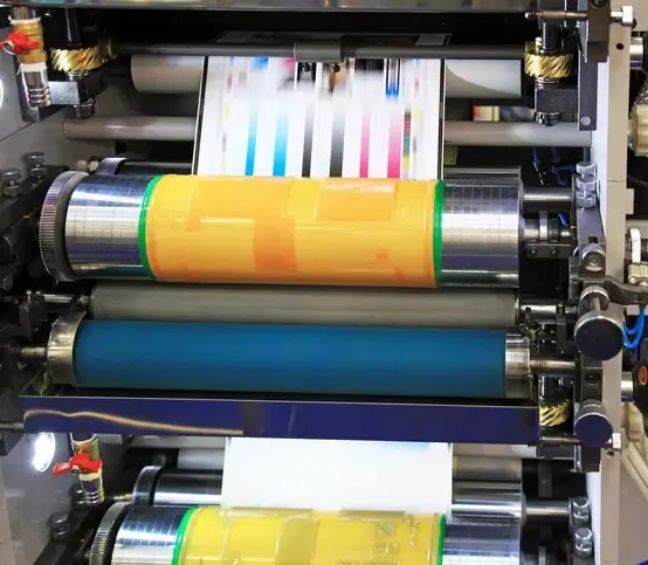
On clear acrylic we normally print second surface, meaning the image goes onto the back of the panel and is viewed through the material.
Two benefits. The glossy acrylic face protects the print completely, so it cannot be scratched, scuffed or cleaned off, which matters on anything in a public area. And the image gains a depth and a glass-like quality that front-surface printing cannot reproduce.
The design has to be mirrored before printing and the colour sequence has to be reversed, with white laid last rather than first. That is our problem rather than yours, but it is worth knowing why the file we send back for approval looks different from the one you supplied.
Direct to substrate printing uses a flatbed UV printer to apply ink straight onto a rigid material such as acrylic, aluminium or PVC, with no adhesive vinyl layer in between. iCandy Grafix uses this method for signs needing a clean edge, longer life and sharper detail than vinyl-mounted graphics.
For rigid signs, usually yes. Direct printing removes the risk of vinyl bubbling or lifting at the edges over time and produces a crisper image with no laminate sheen. Vinyl mounting still makes sense where the graphic needs to be replaceable on a reusable panel.
Yes. Our flatbed printer lays white ink, which allows full colour printing on clear and coloured acrylic. iCandy Grafix typically prints second surface on clear acrylic, meaning the image is applied to the back and viewed through the panel, which protects the print and gives a glass-like depth.
Yes. UV flatbed printing works on wood, MDF, glass, ceramic tile, aluminium and powder-coated metal, using an adhesion promoter where the surface requires it. For unusual materials, iCandy Grafix will test a sample rather than guess.
UV-cured ink printed directly onto a rigid substrate is highly scratch resistant and, on interior signage, effectively permanent. For exterior use we add a UV laminate or clear coat, which gives comparable life to a laminated vinyl-faced panel without the risk of edge lift.
Copyright © 2026 iCandy Grafix. All rights reserved. Powered by Fast Hippo Media

